
EGYM Fitness
EGYMSports
3.276.00 Reviews
- Version
- 3.89
- Installs
- 500.00K
- Age Rating
- Everyone
Screenshots
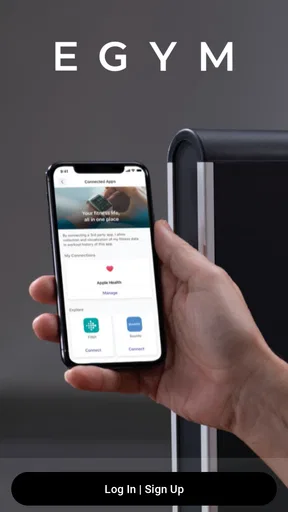
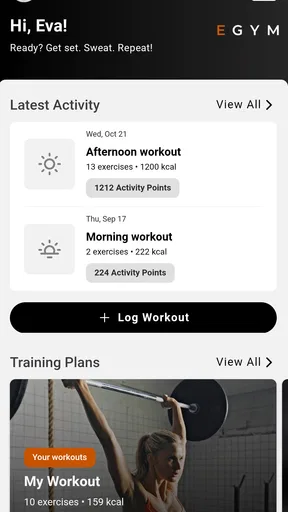
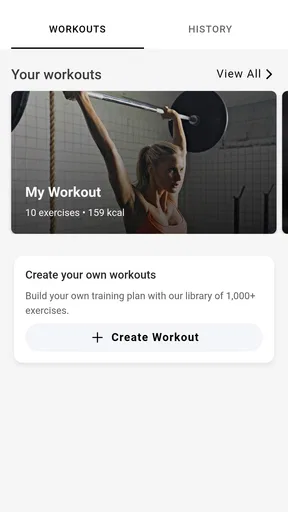
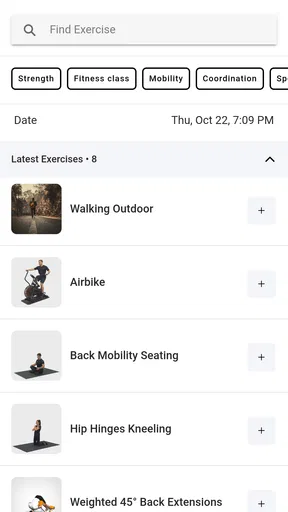
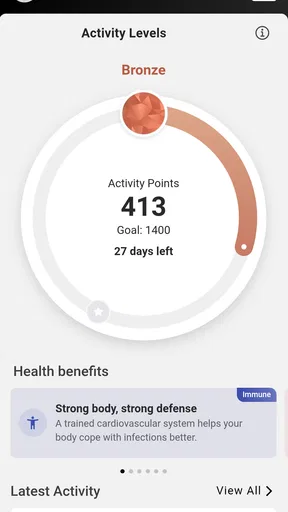
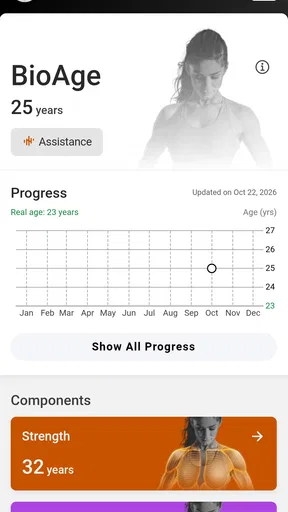
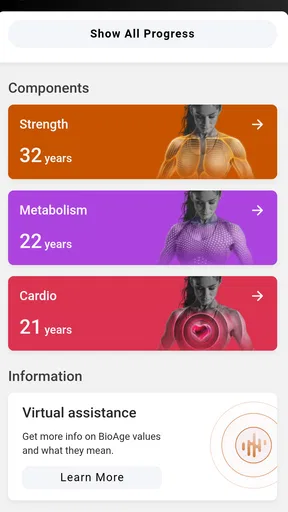
Our Review of EGYM Fitness
 Analysis by Appyee
EGYM Fitness is the kind of sports app I would judge less by flashy presentation and more by how well it supports a real exercise routine. After spending time with it, my view is fairly clear: it makes the most sense for people whose workouts are already connected to an EGYM-equipped fitness environment, while it is a less convincing choice for someone searching for a completely independent home-training coach. That distinction matters more than the simple fact that the app is free.
Developed by EGYM, this fitness app sits in a practical space between a gym companion and a general workout tool. Its store summary welcomes users to EGYM Fitness powered by EGYM, but the useful question is what that means in day-to-day use. For me, the answer is that its value comes from helping a member keep exercise information and gym activity in one place rather than treating the phone as a replacement for every part of training.
The app belongs to the sports category, is available at no cost, and is rated for Everyone. It has built a noticeable audience, with more than half a million installs, although its average score of 3.2 from roughly five thousand ratings suggests that the experience is not equally satisfying for everyone. I read that rating as a warning to keep expectations realistic, not as a reason to dismiss the app outright.
Where EGYM Fitness works best in a regular gym routine
The strongest case for using EGYM Fitness is continuity. A gym visit often becomes a collection of small decisions: which machine to use, what level felt appropriate last time, whether a missed session should be treated as a setback, and how to avoid wandering between exercises without a plan. An app connected to that kind of routine can reduce the mental effort involved in simply getting started.
I especially like the idea of using it before entering the gym, rather than opening it only after arriving. A quick look can help me remember the purpose of the session and prevent the familiar problem of doing whichever equipment happens to be free. That may sound modest, but consistency is often built from these small reductions in friction. The app is more useful when it becomes part of the arrival ritual than when it is treated as a novelty.
There is also a practical benefit for people who alternate between busy and quiet training days. On a crowded evening, I may need to adjust the order of exercises. A gym-focused companion is helpful when it lets me keep the intended structure in mind while adapting to the room. I would not expect that flexibility to replace professional coaching, but it can make an ordinary session feel more deliberate.
One non-obvious strength is that the app can serve as a memory aid even when motivation is low. I do not always need a new workout idea; sometimes I need a clear reminder of what I was already trying to do. That makes it particularly suitable for users who have joined a gym with good intentions but struggle to turn occasional visits into a repeatable habit.
A realistic weekday use case
Imagine finishing work with limited energy and only a short window before heading home. Without a plan, it is easy to skip the gym or spend the first part of the session deciding what to do. I would use EGYM Fitness earlier in the day to reconnect with my intended routine, then check it again when I arrive. The goal would not be to chase an ambitious workout; it would be to remove enough uncertainty that a manageable session actually happens.
That workflow is more valuable than endlessly browsing exercise content. A person who already knows they need structure may gain more from a focused gym companion than from a large library of inspirational routines. In my experience, too many choices can become another excuse to postpone training.
Another useful approach is to review the app after the workout, not just before it. I would make a brief mental note of what felt comfortable, what caused hesitation, and where the routine became confusing. That feedback helps me decide whether the next session should follow the same pattern or whether I need help from a trainer. The app can support that reflection, but it cannot make the judgment for me.
What makes it different from ordinary workout apps
Compared with a generic exercise app, EGYM Fitness feels more relevant when the user’s routine is tied to a gym setting rather than a living room. Many general alternatives focus on guided videos, bodyweight sessions, timers, or broad training plans. Those are better choices for someone who wants to exercise without equipment or without visiting a facility.
EGYM Fitness is a narrower tool, and that narrowness can be a virtue. It does not need to compete with every type of fitness content if it helps a gym member stay oriented. I would choose it over a general workout library when my main problem is remembering and organizing gym sessions. I would choose the general library instead when I want detailed instruction for movements, a home routine, or a highly specialized plan.
The trade-off is important: a focused app can feel simpler because it avoids irrelevant material, but it can also feel limited if your needs change. Someone who alternates between strength training, running, mobility work, and home workouts may eventually want a broader platform. EGYM Fitness is best understood as a companion for one training context, not as a complete replacement for every fitness service.
The friction that keeps it from being an automatic recommendation
The average rating tells me that the app has meaningful room for improvement from a user-experience perspective. I would not interpret that score as proof that it fails for every person, but it does suggest that smoothness and reliability may matter as much as the underlying idea. A fitness app is used at inconvenient moments: while changing clothes, between exercises, or when attention is already divided. Small delays or unclear screens become especially irritating there.
That is the main weakness I would keep in mind. If an app is meant to support a workout, it should stay out of the way. I have little patience for a tool that makes me repeat steps, search for information that should be obvious, or interrupt the rhythm of a session. Even a useful training companion loses value if checking it feels more complicated than remembering the routine manually.
There is also a dependency trade-off. The app’s strongest appeal is connected to the EGYM ecosystem and gym-based training. If I am not using a facility where that context is relevant, I may find the experience less useful than a standalone fitness planner. Before committing to it, I would ask myself a simple question: do I want help with an EGYM-centered gym routine, or am I actually looking for a universal fitness coach? The answer determines whether the app feels focused or incomplete.
People who expect detailed educational guidance should also be cautious. An app can help organize activity without teaching every movement in depth. If I am new to resistance training, recovering from an injury, or unsure about safe technique, I would treat the app as a supporting tool and ask a qualified professional for instruction. Convenience should not be confused with supervision.
Privacy and phone habits are practical considerations too. I would avoid turning every workout into a screen-heavy task. The best use is to check the necessary information, put the phone away, and concentrate on moving safely. If I found myself constantly managing the app instead of training, I would simplify the routine or use a different method.
How I would set it up for less friction
My first step would be to install the current version, 3.89, on a device running at least Android 10, then spend a few minutes understanding the layout before the first serious workout. That preparation matters because learning an app while tired and surrounded by other gym members is a poor test of its design.
I would then keep the first week deliberately simple. Rather than trying to explore every available part of the experience, I would use it for one repeatable purpose: preparing for a gym session and checking the routine at the right moment. This makes it easier to tell whether the app genuinely saves time. If it does, I would gradually make it part of my normal schedule; if it adds work, I would not force the habit merely because it is free.
A useful advanced habit is to separate planning from tracking. I would prepare the broad outline before arriving, then make only necessary adjustments during the workout. This prevents the phone from becoming a distraction and gives the app a clear job. The more decisions I try to outsource to it, the more likely I am to notice any gaps in its guidance.
I would also compare how I feel after several consistent sessions rather than judging it after one visit. A fitness companion should be assessed by whether it helps me return, not by whether the first interaction feels impressive. That is especially relevant here because the app’s audience is broad, and the experience may depend heavily on how closely a person’s routine matches its intended gym context.
Who should use it, and who should look elsewhere
I would recommend EGYM Fitness first to members who already train in an EGYM-related gym environment and want a digital aid for staying organized. It is also a sensible option for beginners who feel overwhelmed by the number of machines and choices in a fitness center, provided they understand that an app is not a substitute for learning proper technique.
It may suit people returning after a long break as well. In that situation, the hardest part is often rebuilding regularity rather than discovering an advanced program. A simple routine companion can help make the next visit feel like a continuation instead of a completely new decision. I would still keep the initial workload sensible and ask staff for guidance where needed.
I would be less enthusiastic for runners who mainly need route recording, for home exercisers seeking video-led classes, or for athletes requiring detailed sport-specific analysis. A general training platform may serve those users better. Likewise, anyone who wants a large collection of guided workouts and nutrition material should compare alternatives before settling on a gym-centered app.
The free price makes trying it low-risk, but free does not automatically mean universally suitable. The real cost is attention: learning the workflow, checking it during sessions, and deciding whether it fits the way you train. If the app does not make gym visits clearer after a reasonable trial, I would stop using it rather than keeping another unused icon on my phone.
Its Everyone age rating also makes it broadly approachable from a content perspective, but suitability still depends on the individual’s fitness level and circumstances. A younger or inexperienced user may need an adult, trainer, or health professional to help interpret exercise choices. The rating describes accessibility, not personalized medical advice.
My final verdict on EGYM Fitness
My overall opinion is positive but specific: EGYM Fitness is most valuable as a gym-routine companion, not as an all-purpose fitness solution. Its strongest contribution is helping a person bring more structure to ordinary visits, especially when the gym environment and EGYM equipment are already part of that person’s routine.
The app has been available since December 20, 2017, and the current version shows that it remains an active product rather than a forgotten experiment. Its audience of over half a million installs indicates that the concept has reached many users, while the middling average rating reminds me to approach it as a useful fit for some people rather than a universally polished recommendation.
I would try it if I belonged to a compatible gym and wanted a free way to make sessions more organized. I would not choose it as my first option for home workouts, extensive coaching, or specialized athletic training. In those cases, a broader or more instructional alternative would probably deliver more value.
For the right user, the app can quietly improve consistency by reducing the number of decisions between arriving at the gym and beginning the workout. That is not a dramatic promise, but it is a meaningful one. My advice is to test it with a simple, repeatable routine and judge whether it genuinely clears up your sessions. If it does, keep it in the rotation; if it becomes another source of screen time and confusion, move on without guilt.
In short, I see EGYM Fitness as a practical, context-dependent sports app from EGYM. It earns a recommendation for gym members who want structure and continuity, with the important caveat that its focused design and uneven user satisfaction make it a poor match for people seeking a complete fitness world in one app.
Verdict
Strengths of EGYM Fitness
- Personalized workouts adapt to your fitness level and goals.
- Progress tracking helps monitor training consistency and improvements.
- Exercise demonstrations make unfamiliar movements easier to follow.
- Works well for both gym-based and at-home training routines.
- Integrates with selected fitness devices and health platforms.
Limitations of EGYM Fitness
- Some features may require an EGYM-connected gym membership.
- The app is less useful without compatible gym equipment or access.
- Workout variety can depend on the programs available through your gym.
- Health and device integrations may require extra setup and permissions.
- Beginners may need additional guidance for technique and training form.
Similar Picks in This Category
View All
BeSoccer: Soccer Live Score
BeSoccer apps4.3

Cricbuzz - Live Cricket Scores
Cricbuzz.com3.7

NFL
NFL Enterprises LLC2.4

Da Fit
MO YOUNG LIMITED3.6

ESPN
Disney4.5

LiveScore: Live Sports Scores
LiveScore Limited4.5
Frequently Asked Questions
What is EGYM Fitness and who is it designed for?
EGYM Fitness is a digital training platform connected to participating gyms and fitness clubs. It can help members follow personalized workouts, use compatible EGYM smart equipment, monitor progress, and receive guidance based on their goals and fitness level. Availability and features may differ between clubs, so it is mainly intended for people whose gym supports the EGYM ecosystem.
Do I need a gym membership to use EGYM Fitness?
In most cases, you need an active membership at a gym or health club that works with EGYM. The app is not generally a complete replacement for a gym membership, because many of its functions depend on club-specific equipment, training plans, and account access. Before downloading, check whether your facility supports EGYM and whether it has enabled the features you want to use.
What features can I expect from the EGYM Fitness app?
Depending on your gym’s setup, EGYM Fitness may provide personalized training plans, exercise instructions, workout tracking, progress information, and integration with connected strength-training machines. Some clubs may also offer digital coaching, fitness assessments, or access to a broader training network. The exact experience can vary considerably, since clubs choose which EGYM services and equipment are available to members.
Is EGYM Fitness suitable for beginners?
Yes, EGYM Fitness can be useful for beginners because guided workouts and machine-based settings may make it easier to understand how to train safely and consistently. The app can help organize sessions and reduce uncertainty about exercise selection. However, digital guidance should not replace advice from qualified gym staff, especially if you have injuries, medical conditions, or no previous strength-training experience.
Does EGYM Fitness track personal data and workout progress?
EGYM Fitness may store information such as your profile details, training history, selected goals, exercise performance, and progress measurements, depending on the services activated by your gym. This data supports personalization and reporting, but you should review the app’s privacy policy and your club’s data practices before creating an account. Permissions, connected devices, and available privacy controls can vary by platform and location.
